
Looking for the Best Haldi Kumkum Return Gifts ? Since our handcrafted collection is currently out of stock due to high demand, we recommend these top-rated budget-friendly gift sets on Amazon for your ceremony:
Click Here to View Best Selling Haldi Kumkum Gift Sets (Pack of 50)
Click Here to View Decorative Haldi Kumkum Bowls & Plates
Special for Our Global Readers (USA, UK, Canada): Looking for Haldi Kumkum return gifts or ceremony essentials ? Check out the best-rated options available for quick delivery on Amazon:
Click here to view Top-Rated Return Gifts on Amazon.com
Planning or attending a Haldi Kumkum ceremony ? This complete guide answers what it means, why it is celebrated, what rituals to follow, what gifts to give, and what guests should bring.
The Haldi Kumkum Ceremony 2026 continues to be one of the most cherished traditions among Maharashtrian families in India and abroad.
Celebrating the Essence of the Haldi Kumkum Ceremony
In the heart of Indian tradition, especially vibrant in Maharashtra, lies the beautiful ritual of Haldi Kumkum. More than just a social gathering, it’s a lively expression of femininity, prosperity, and community bonding, generally celebrated by married women. This complete guide will cover everything you need to know to host or attend this cherished Indian tradition meaningfully.
Haldi Kumkum ceremony is widely celebrated not only in India but also by Indian families living in the United States, United Kingdom, Canada, Australia, and other parts of the world.
What is Haldi Kumkum? Understanding Its Deep Significance
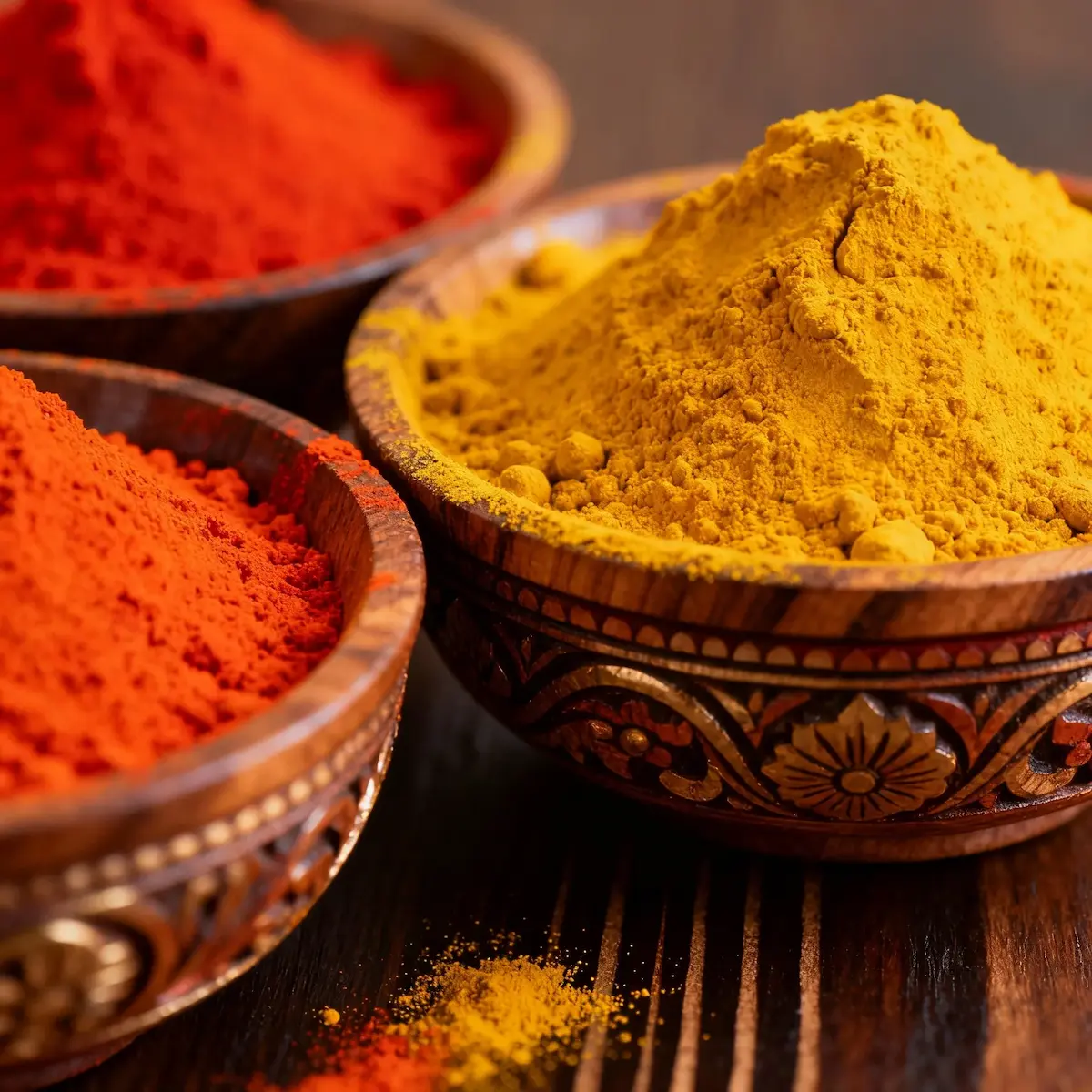
Haldi (turmeric) and Kumkum (vermilion) are sacred elements in Hindu tradition. Symbolizing purity, fertility, and auspiciousness, they are offered during this ceremony to married women (known as Suvasinis) to wish them prosperity and a long life for their husbands. Kumkum, specifically, signifies marital status and the sacred bond of marriage. Swapping these sacred powders among women symbolizes sharing blessings, good wishes, and strength. The event typically takes place during the Makar Sankranti festival (January) but can also be held during other auspicious days throughout the year.
The Historical Origins of Haldi Kumkum
The Haldi Kumkum ceremony traces its elegant roots back to the time of the Peshwas, when life in Maratha households danced to the rhythm of royal customs and closely-knit communities. In an era when most women of noble families spent their days within the household, opportunities for social interaction were rare. The Haldi Kumkum gathering emerged as a welcome occasion—an excuse for women to drape themselves in their finest saris, step out, and celebrate togetherness.
These get-togethers were more than just festive afternoons. Hostesses would invite fellow married women, often gifting symbolic items like kitchenware or personal ornaments—tokens of goodwill and abundance. Between laughter and catching up, guests would savor classic Maharashtrian treats like kairi panha (refreshing raw mango drink) and vatli dal (spiced lentil salad), igniting the senses with flavors as lively as the conversation.
The tradition soon flourished beyond the palaces, winding its way into every corner of the community. And the beauty? There was no limit to the connections—women could visit and host each other across the season, making every celebration a chance to build new bonds and cherish old ones. What began as a royal custom transformed into a joyful social calendar, keeping spirits high long after the harvest festival of Sankranti, often until February’s mellow sunlight.
The Importance of Applying Haldi First
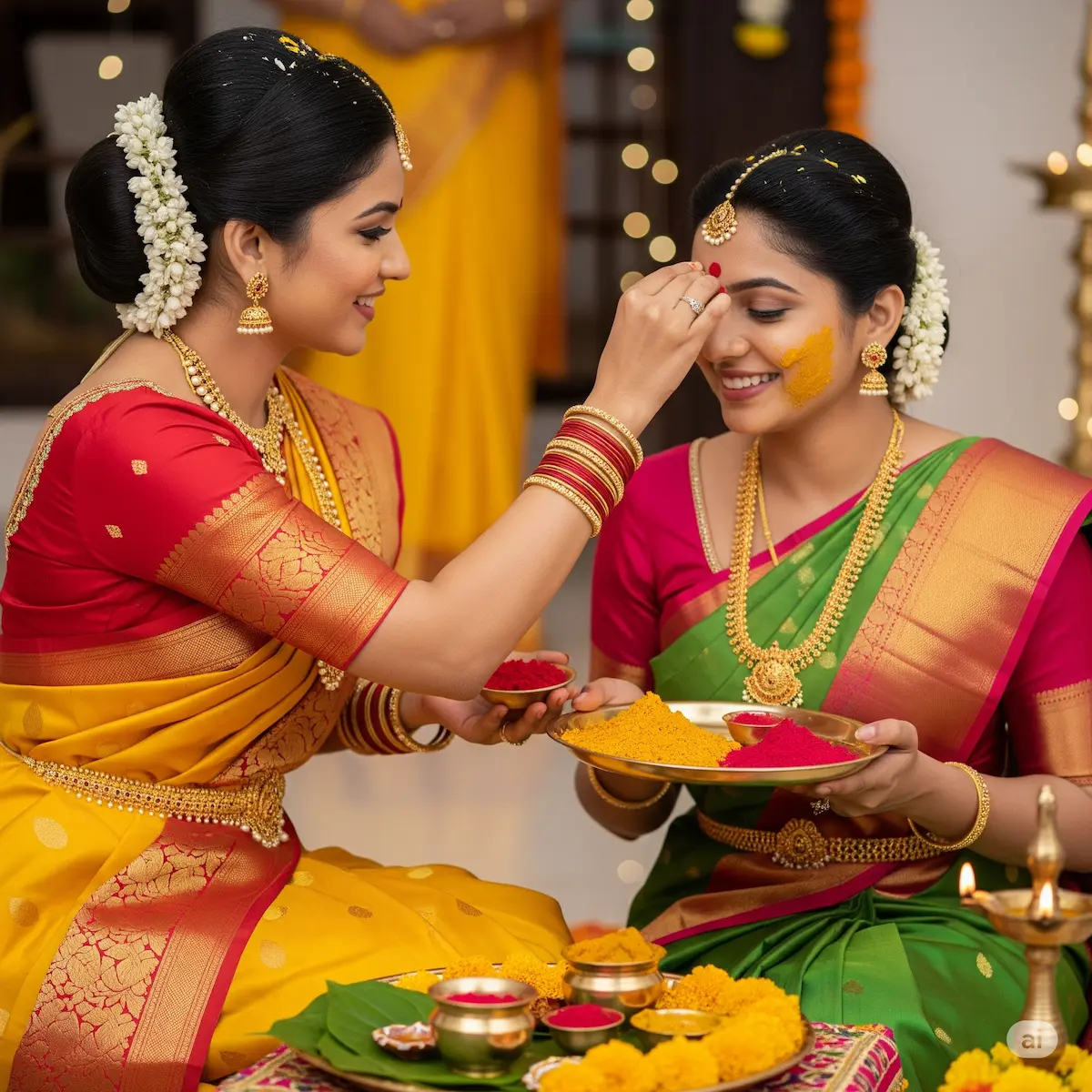
The ceremony begins by gently applying haldi (turmeric) to the forehead of each married woman. Turmeric isn’t just prized for its vibrant golden color—often likened to the warmth and energy of the sun—but is also celebrated in Indian households for its natural purifying and protective qualities. It’s believed that placing haldi first helps to ward off negativity, inviting positivity and well-being into one’s life much like sunlight brightens a new day. This ritual sets a joyful and auspicious tone for all the blessings that follow in the Haldi Kumkum celebration.
Hosting a Haldi Kumkum Ceremony: A Step-by-Step Guide
Here’s how you can host this beautiful ritual, ensuring every detail reflects tradition and warmth:
- Preparation & Decor: Begin by thoroughly cleaning your home or the designated hosting area. Adorn the space with fresh flowers, colorful rangoli, auspicious mango leaves, and the gentle glow of diya lights. Set up a small altar featuring a print or idol of a goddess, such as Goddess Lakshmi or Durga, to invoke blessings.
- Inviting Suvasinis: Extend warm invitations to married women from your neighborhood, family, and friends. The autumn (late afternoon/early evening) is generally considered an ideal time for this gathering.
- Applying Haldi-Kumkum: Greet your guests with a warm smile and offer them a comfortable seat. As the host, you will apply a small dab of haldi and kumkum on the forehead of each woman, symbolizing good fortune and blessings. Following this, a traditional sweet (like tilgul or laddoo) and a return gift (known as ‘vayan’) are offered as tokens of goodwill.
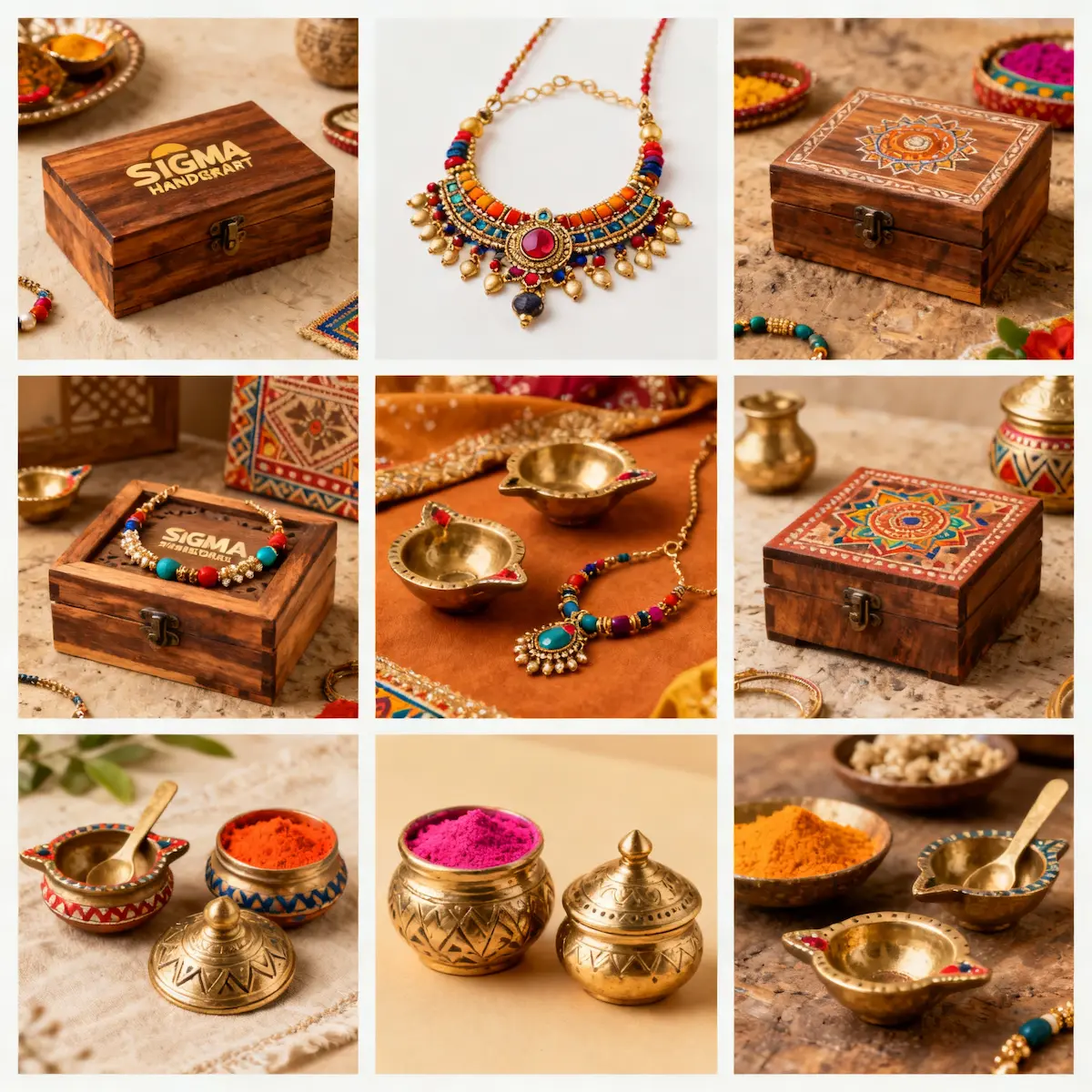
- Offering Return Gifts (Vayan): These gifts are a heartfelt gesture of appreciation. Traditional options include bindis, combs, betel nuts, small haldi-kumkum boxes, or modest household items. Increasingly, eco-friendly or beautifully handcrafted gifts from places like Sigma Handicraft are becoming popular, adding a unique touch.
- Socializing and Light Refreshments: After the rituals, encourage guests to mingle, share stories, and enjoy traditional snacks and tea or coffee, fostering a sense of community and camaraderie. If your Haldi Kumkum ceremony falls during the month of Chaitra, consider delighting your guests with a seasonal spread—fresh fruits, local vegetables, and the refreshing kairicha panna (a cooling drink made from raw mango and jaggery) are especially cherished at this time. These thoughtful touches not only honor tradition but also create a warm, welcoming atmosphere for all who attend.
You can also explore simple Haldi Kumkum decoration ideas at home for a welcoming setup.
Which Finger is Considered Auspicious for Applying Kumkum?
When it comes time to apply kumkum during the ceremony, tradition suggests using the ring finger on your right hand. According to Hindu scriptures, the ring finger is associated with the planet Sun and carries positive, auspicious energy. Applying kumkum with this finger is believed to enhance blessings and invite prosperity for both the giver and receiver. This mindful little detail deepens the spiritual significance of your ritual—and carries forward generations of cultural wisdom.
What Should Guests Bring to a Haldi Kumkum Ceremony ?
Many first-time guests often wonder what to take for Haldi Kumkum ceremony to follow the ritual correctly. As a guest attending a Haldi Kumkum, you don’t need to arrive empty-handed! While the host takes care of most arrangements, it’s thoughtful to bring along some traditional offerings or small tokens. Here are a few items you can consider:
- A small packet of Haldi and Kumkum: Although these are usually provided, carrying your own is a lovely gesture and can be offered at the altar.
- Fresh flowers or a flower garland: Flowers, especially marigold or jasmine, are always appreciated for their fragrance and auspiciousness.
- Betel leaves and betel nuts: These symbolize prosperity and are a staple at most Hindu ceremonies.
- Coconut: A symbol of good luck, a coconut is often used in poojas and can be presented if the occasion calls for it.
- Sweets or tilgul: Sharing traditional sweets like tilgul or laddoos is customary during these festivities.
- Small gifts or novelty items: Tokens such as bangles, bindis, combs, or decorative boxes can be shared as part of the celebration.
- A coin or modest cash offering: If you wish, a token amount can be offered as part of the blessings.
Remember, more than the items themselves, it’s the spirit of participation and goodwill that counts. A warm smile and a willing heart truly complete the celebration!
Elevate Your Haldi Kumkum Celebration: Special Ideas
Want to make your ceremony truly memorable? Consider these ideas:
- Choose a Theme: Opt for a color theme (like traditional yellows and reds) or a specific traditional dress code, such as elegant Nauvari sarees for guests.
- Go Sustainable: Embrace eco-consciousness by using cloth bags for gifts, seed paper for invitations, and selecting sustainable return gifts.
- Add Music & Dance: Enhance the cultural vibe with traditional Marathi lavani performances, devotional bhajans, or other folk dances.
- DIY Rangoli Corner: Set up a dedicated corner where guests can contribute to a communal rangoli, adding their creative touch to the festive decor.
Thoughtful Return Gift Ideas for Haldi Kumkum
Small Lakshmi and Ganesha statues for Haldi Kumkum return gifts are considered highly auspicious, symbolizing prosperity, happiness, and blessings for the family.
The ‘vayan’ or return gift is a token of love and respect. Here are some thoughtful and culturally rich ideas:
- Aromatic Candles or Incense Sticks: Choose natural, handcrafted varieties.
- Terracotta Pots or Hand-Painted Diyas: Explore Sigma Handicraft’s collection for beautifully designed options.
- Mini Spice Jars or Artisanal Pickles: A delightful culinary treat.
- Handmade Jewelry: Small, elegant pieces like bangles or earrings are always cherished. Discover unique handcrafted jewelry at Sigma Handicraft.
- Eco-Friendly Jute Bags or Fabric Sacks: Practical and environmentally conscious.
- Decorative Haldi Kumkum Holders: Sigma Handicraft offers exquisite handcrafted boxes perfect for this.
Haldi Kumkum ceremony is part of Indian cultural traditions that are closely linked with seasonal festivals and community gatherings, as explained under Indian traditional festivals.
Related Haldi Kumkum Guides
- What to take for Haldi Kumkum ceremony – simple checklist for guests
- Haldi Kumkum decoration ideas at home for traditional setup
- Haldi Kumkum rituals and celebration explained step by step
- Traditional Haldi Kumkum gift ideas and return gifts
Buy Traditional Haldi Kumkum Items Online
Looking for authentic Haldi Kumkum gifts, idols, diyas, and handcrafted decor?
Explore our carefully curated collection of traditional Haldi Kumkum items trusted by families in India, USA, UK, Canada, Australia and beyond.
👉 View Haldi Kumkum Collection
Final Thoughts
The Haldi Kumkum ceremony 2026 is not just a ritual — it is a beautiful celebration of womanhood, blessings, prosperity, and community bonding. Whether you are hosting the ceremony or attending as a guest, understanding its meaning and traditions helps you participate with respect and joy.
By choosing thoughtful return gifts, following traditional rituals, and adding your personal touch, you can make your Haldi Kumkum celebration meaningful and memorable for everyone involved.
Is Haldi Kumkum ceremony celebrated outside India?
Yes, Haldi Kumkum ceremony is widely celebrated by Indian families living in the USA, UK, Canada, Australia, and other countries, especially during Makar Sankranti and festive gatherings.
When is Haldi Kumkum ceremony celebrated in 2026?
Haldi Kumkum ceremony 2026 will mainly be celebrated during Makar Sankranti in January. Many families also organize the ceremony on other auspicious dates depending on regional traditions and personal convenience.