
Standing Krishna Flute Statue Overview
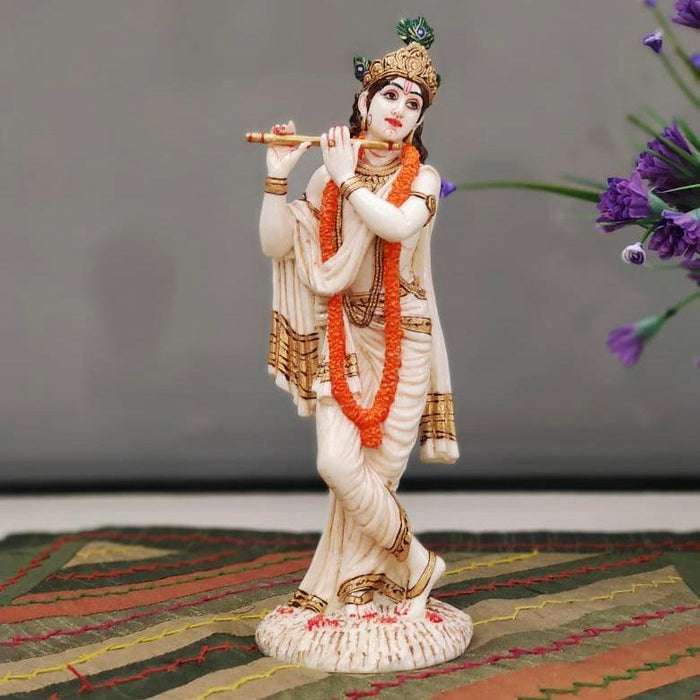
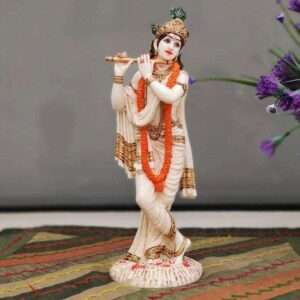
The standing krishna flute statue represents Lord Krishna in a calm and composed standing posture while playing the flute. This form is widely preferred for home temples because it combines devotional presence with visual balance. The statue is designed as a single figure without additional companions such as Radha, cow, or arch, making it suitable for households seeking a clean and focused Krishna murti for daily worship.
The standing posture gives the idol a vertical presence that fits well on shelves, mandir platforms, and console tables. Unlike seated or reclining forms, the standing krishna flute statue maintains a graceful upright stance that remains visually prominent even in compact temple spaces.
Why Standing Krishna Statues Are Commonly Chosen
Standing Krishna statues are often selected for home temples where vertical space is available. The posture allows the idol to appear elegant without occupying excessive surface depth, making it suitable for both small and medium prayer areas.
Flute Playing Pose and Visual Identity
The flute playing pose is the most recognizable feature of the standing krishna flute statue. The flute is held with both hands and positioned across the upper body, making it clearly visible from the front. This pose immediately identifies the idol as Lord Krishna, even when viewed from a distance.
The arm positioning is compact and controlled, ensuring that the flute does not extend beyond the natural width of the body. This makes placement near walls or mandir back panels easier and safer.
Importance of Flute Visibility in Home Worship
In home temples, idols are often placed against a wall or backdrop. The flute placement at chest level ensures that it remains visible and unobstructed, maintaining the visual identity of the standing krishna flute statue.
Posture, Body Alignment, and Balance
The standing krishna flute statue features an upright posture with balanced body alignment. The weight distribution appears even, allowing the statue to remain stable on flat indoor surfaces. The slight bend in the stance adds natural flow without creating a dynamic or dancing posture.
This balanced alignment ensures that the statue looks composed from multiple viewing angles, which is important for home temples where idols may be viewed from the front and sides.
Standing Versus Dancing Krishna Forms
Dancing Krishna statues often involve exaggerated leg and arm movement, which can require additional spacing. The standing krishna flute statue remains calm and structured, making it more practical for daily worship environments.
Facial Orientation and Expression
The face of the standing krishna flute statue is front-facing with a serene and composed expression. This orientation allows devotees to maintain a direct visual connection during prayer. The facial detailing is subtle, avoiding exaggerated expressions that could distract during worship.
The forward-facing gaze supports focused viewing and aligns well with traditional home temple placement practices.
Front Facing Advantage for Puja Setup
A front-facing idol is easier to align within a mandir. The standing krishna flute statue remains visually centered when placed on shelves or platforms at eye level.
Base Design and Placement Stability
The statue rests on a decorative base designed to support the vertical posture of the standing krishna flute statue. The base provides adequate stability for indoor placement and helps distribute visual weight evenly.
The base design allows the statue to be placed directly on mandir shelves, wooden tables, or stone platforms without requiring an additional stand.
Suitable Surfaces for Placement
Flat and level surfaces such as wooden mandirs, marble shelves, and dedicated puja tables are ideal for placing the standing krishna flute statue.
Color Distribution and Detailing Style
The standing krishna flute statue features a light dominant surface tone combined with carefully applied detailing. The contrast between the base tone and accent detailing highlights garments, ornaments, and facial features without overwhelming the overall appearance.
This balanced color distribution allows the statue to blend naturally with both traditional and neutral interior settings.
Compatibility With Home Temple Interiors
The detailing style complements wooden mandirs, stone shelves, and simple wall backdrops, making the statue adaptable to various home temple designs.
Scale and Indoor Suitability
Based on visual proportions, the standing krishna flute statue fits within the tabletop idol category. It is designed for indoor use and is not intended as a floor-standing murti.
This scale makes it suitable for placement at chest or eye level within a home temple.
Recommended Placement Height
Placing the statue at a height where the flute and face are clearly visible enhances visual connection during daily prayer.
Maintenance and Long Term Care
Maintenance of the standing krishna flute statue is minimal. Regular dusting with a dry or lightly damp cloth helps maintain surface cleanliness. Because the statue is a single integrated piece, handling is simple and does not require disassembly.
Care for Continuous Worship Use
Once placed, the statue should remain in a fixed position to preserve alignment and reduce the risk of accidental movement.
Use in Home Temple and Daily Puja
The standing krishna flute statue is well suited for daily puja due to its calm posture and devotional focus. Many households prefer this form because it maintains visual consistency over time and supports a peaceful worship environment.
Integration With Existing Mandir Setup
The statue can be integrated into an existing mandir without altering furniture or layout, making it a practical choice for long-term placement.
Gifting Use for Religious Occasions
This standing krishna flute statue is often selected as a devotional gift for housewarming ceremonies, festive occasions, and family prayer events. The single-figure design makes it a safe and widely accepted gifting option.
Considerations When Gifting
When gifting, it is helpful to ensure that the recipient has a suitable indoor placement area such as a home temple shelf or console.
Placement Guidance and Cultural Reference
For best results, place the standing krishna flute statue on a flat surface facing forward with adequate surrounding space. For general historical background on Lord Krishna and flute depictions in traditional iconography, you may refer to this detailed overview on Lord Krishna.
Alignment Tips
Center alignment within the mandir improves symmetry and ensures that the base remains fully supported.
Explore more premium handcrafted items in our Marble Statues collection.
Browse all handcrafted decor items in the Sigma HandiCraft Shop.

Reviews
There are no reviews yet.